
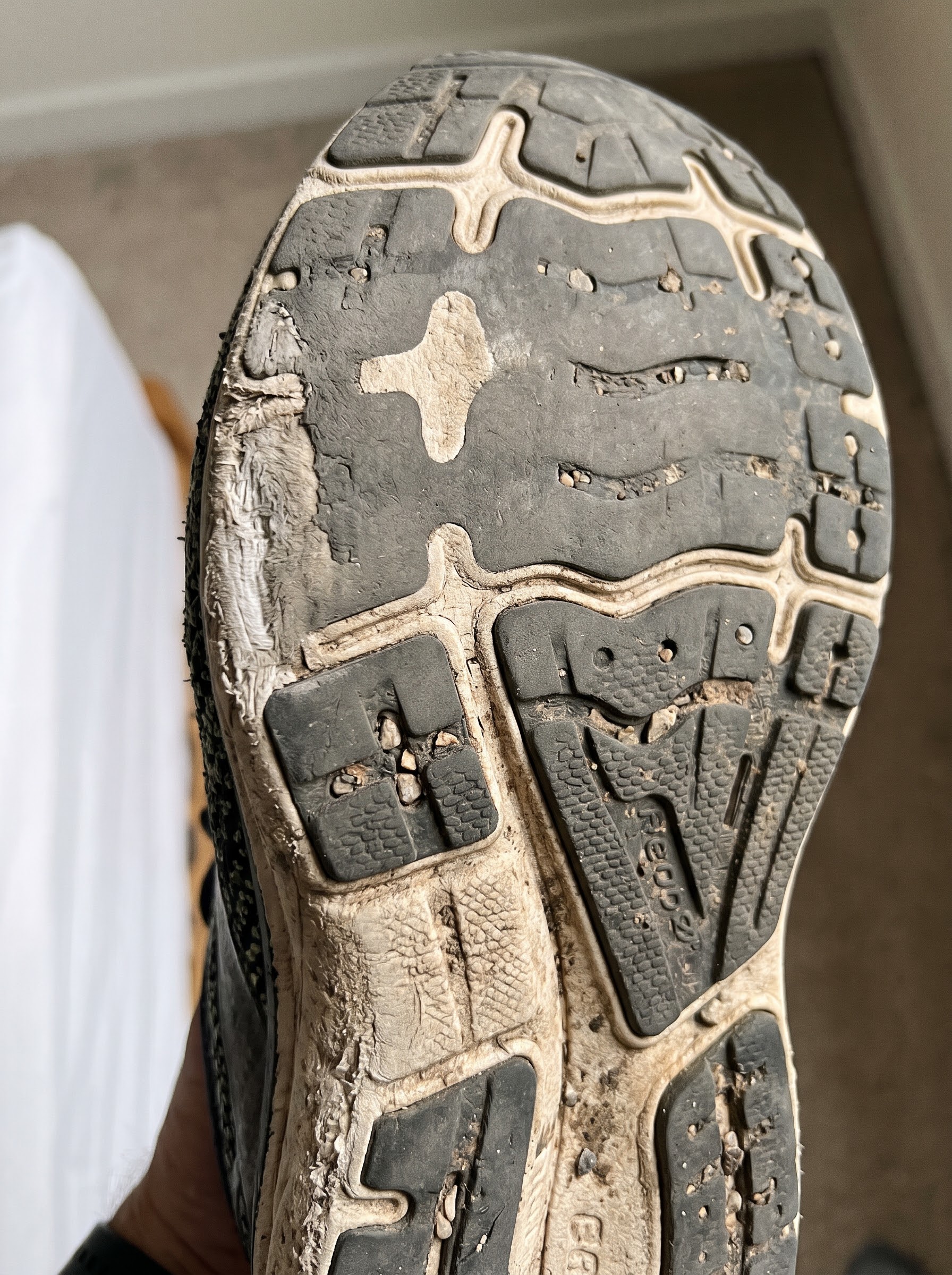
In human gait mechanics, excessive supination during push-off means the foot fails to transition smoothly across to the ball of the foot and big toe, rolling off over the outer border (the lateral metatarsals).
Instead of rolling over the rigid first metatarsophalangeal (MTP) joint, the foot toes off the 4th and 5th metatarsals.
Here is a breakdown of why this happens, moving from the foot up to the hip and pelvis:
1. Structural or Mobility Blocks at the Big Toe (Hallux Rigidus / Functional Hallux Limitus)
The Forefoot Rocker Mechanism:
For a normal, powerful push-off, the big toe must extend (dorsiflex) roughly 60°–65°. As it bends back, it engages the windlass mechanism, tightening the plantar fascia, lifting the medial arch, and locking the foot into a stable, rigid lever.
The Compensatory Drift:
If the big toe joint is stiff, painful, or mechanically blocked (functional hallux limitus), the body cannot roll forward over the first ray. To bypass the block, propulsion drifts laterally toward the outer, smaller toes.
2. Lack of Ankle Rocker (Restricted Talocrural Dorsiflexion)
For the tibia (shin) to glide forward over the planted foot, the ankle joint needs adequate dorsiflexion.
If the talocrural joint is stiff, or if the calf complex (soleus/gastrocnemius) is excessively tight, the shin cannot travel straight forward.
The foot frequently evades this frontal block by either collapsing into a flat-footed pronation spin-out or rolling prematurely onto the lateral edge of the foot, driving off the outer toes before the ankle ever reaches full forward range.
3. Failure to Anchor the 1st Metatarsal & Weak Peroneus Longus
The Role of Peroneus Longus:
The peroneus (fibularis) longus wraps underneath the foot and anchors into the base of the 1st metatarsal and medial cuneiform. Its job during late stance is to plantarflex and depress the first ray down into the ground (the medial pillar of the tripod).
What Goes Wrong:
If the peroneus longus is weak, inhibited, or fires late, the 1st metatarsal floats or fails to ground. The weight stays anchored on the lateral column (outer border of the foot), resulting in an inverted, supinated push-off.
4. Impaired Tibial Internal Rotation & Knee Coupling
During mid-stance, the lower leg must internally rotate slightly as the foot pronates to absorb shock, before reversing as the body moves toward push-off.
If the shin is stuck in excessive tibial external rotation (or if the subtalar joint cannot pronate during midstance), the line of force never crosses medially toward the big toe. The foot stays tilted outward, forcing the push-off to occur strictly through the lateral foot.
5. Upstream Glute and Pelvic Dysfunction (Lack of Hip Drive and Internal Rotation)
Acetabulofemoral Alignment: While hip external rotation and glute strength are vital for pelvic stability, the hip must also possess adequate internal rotation as the pelvis rotates over the stance leg in late stance.
The Gluteus Medius / Tensor Fasciae Latae (TFL) Axis: If the deep hip external rotators or lateral hip structures (IT band/TFL) are hypertonic and rigid, or if the hip cannot extend behind the body due to a slouched pelvis, the runner cannot bring their center of mass smoothly over the medial side of the foot.
The Compensatory Flick:
Without a true backward hip drive, the runner "swings" or "flicks" the leg off the ground from the outside, keeping the foot inverted and rolling off the lateral border.
Why Excessive Lateral Push-off is Inefficient and Risky
1. Loss of Elastic Return:
The outer column of the foot (4th and 5th metatarsals) is designed for mobile shock absorption and adapting to uneven terrain—not rigid propulsion. Levering off the outer edge produces far less mechanical power than driving through the first ray.
2. Bone and Soft Tissue Strain:
The 2nd through 5th metatarsals have much thinner shafts compared to the robust 1st metatarsal. Prolonged lateral push-off sharply increases the risk of:
3. Potential 5th metatarsal / Jones stress fractures
4. Peroneal tendinopathy
From straining of the peroneus musclesto stabilize the outer ankle
5. Lateral knee/IT band friction (due to lateral loading vectors traveling up the leg)
Get a running gait analysis
Besides looking at the sole of your shoe for its wear and tear pattern, getting your running or walking gait analysed is the first step to understanding your movement efficiency and injury risk.
You can also send us your walking and running gait videos, and we will be more than happy to have one of our therapists look at them and revert back to you on the next steps.
Get in touch with our team today!


